
Important Travel Insurance Update for Uganda, DRC, and Level 4 Destinations
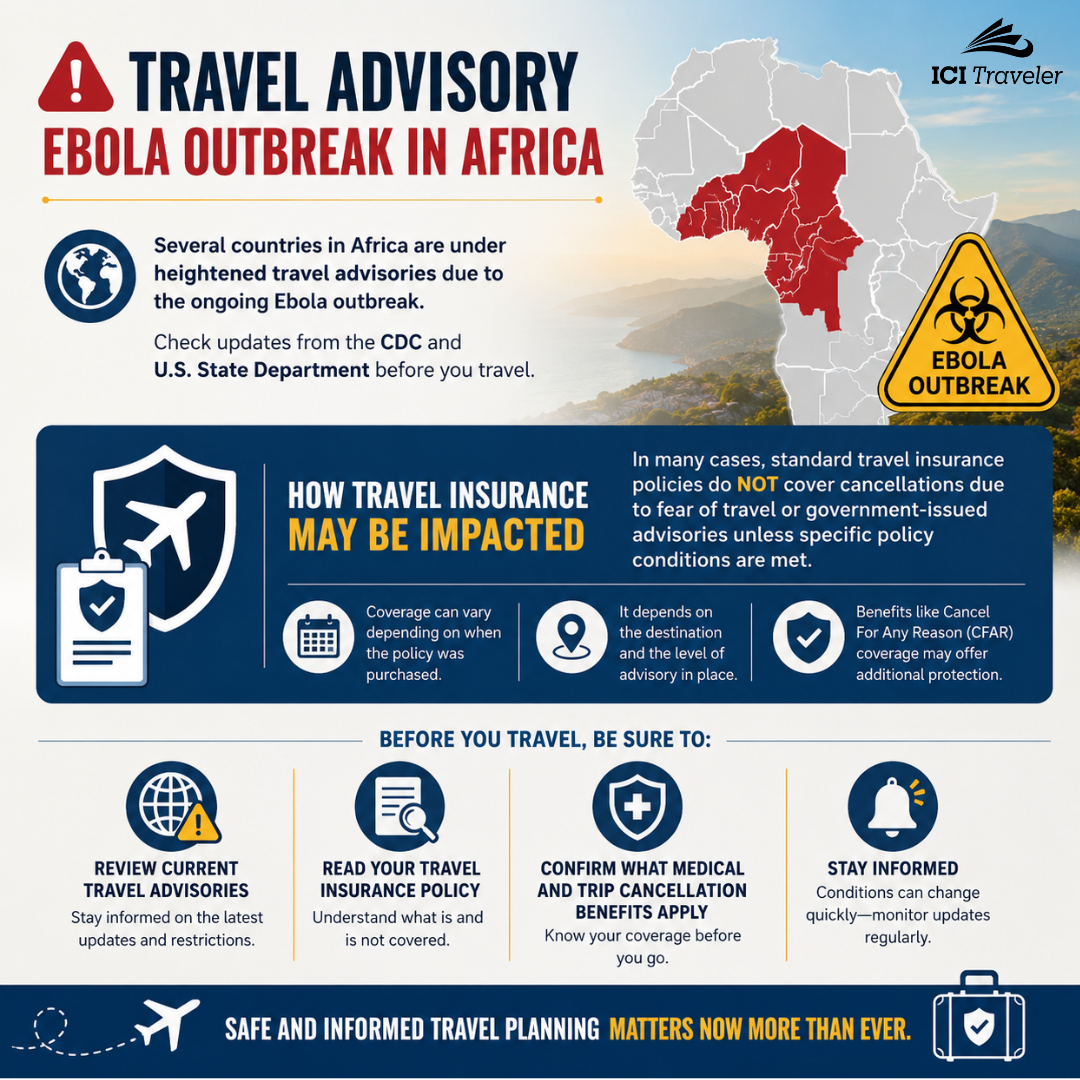
Recent updates from the U.S. Department of State and CDC regarding Ebola concerns in Uganda and the Democratic Republic of Congo (DRC) have created new questions for travelers, mission organizations, and group leaders regarding travel insurance coverage.
As of May 2026, Uganda, the DRC, and portions of the surrounding region are under a Level 4 “Do Not Travel” advisory. While some insurance plans may still be available for purchase for these destinations, travelers should understand that traveling to a Level 4 region carries significant risks and limitations that may affect both coverage eligibility and access to medical services.
Can Travel Insurance Still Be Purchased for Uganda or the DRC?
At this time, some carriers are still allowing policies to be purchased for travelers going to Uganda and certain surrounding regions. Availability may vary by carrier and could change quickly depending on government advisories and outbreak developments.
Some carriers have already removed affected destinations from online purchasing systems, while others continue to offer coverage options with specific limitations or exclusions.
Will Standard Medical Coverage Still Apply?
In many cases, standard medical coverage for unrelated accidents or illnesses may still apply. For example, treatment for injuries such as a sprained ankle, broken bone, or stitches from an accident could still be considered eligible medical expenses under the policy terms and conditions.
However, travelers should understand that traveling to a Level 4 destination significantly increases the overall risk environment.
Important Limitations Travelers Need to Understand
Even when a policy remains active, there are situations where coverage, response capabilities, or claim outcomes may be affected due to the travel advisory and local conditions.
Potential limitations may include:
Limited hospital capacity
Government restrictions or quarantine measures
Transportation interruptions
Reduced availability of emergency evacuation services
Delays in accessing medical care
Security or operational restrictions preventing evacuation teams from entering affected areas
In other words, insurance coverage and real-world access to care are not always the same thing.
For example, a traveler may technically have medical evacuation benefits included in their policy, but if aircraft, medical teams, or transportation providers cannot safely access the region, evacuation may not be immediately possible.
Additionally, when travelers knowingly continue into a Level 4 destination, claims may be subject to additional review based on the circumstances surrounding the incident, local conditions, and policy exclusions.
What About Ebola-Related Claims?
Many carriers are currently treating the Ebola outbreak in the region as a foreseeable event. Because of this, outbreak-related claims may not be covered under standard policy provisions.
Certain higher-tier plans may include benefits related to travel warnings or travel alerts issued after the policy's effective date, but these benefits are highly time-sensitive and may not apply if the advisory was already in place when coverage was purchased.
Travelers should carefully review policy wording and discuss their specific situation with their insurance advisor before purchasing coverage.
Recommendations for Travelers Considering Uganda Travel
Travelers and mission organizations should carefully evaluate:
The current State Department advisory level
Local medical infrastructure
Evacuation feasibility
Airline and transportation reliability
Financial risks associated with trip interruption or medical emergencies
For travelers who still plan to proceed with travel, some carriers are recommending higher-tier plans and optional Cancel For Any Reason (CFAR) coverage when available and eligible.
Most importantly, travelers should understand that when traveling to a Level 4 destination, there is inherently greater uncertainty and risk, both medically and logistically.
As conditions continue to evolve, travelers are encouraged to stay informed through official government advisories and maintain close communication with their travel insurance provider regarding any changes that could impact coverage or assistance services.